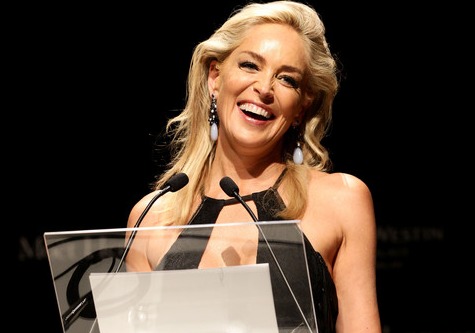
Sharon Stone is running for office. I endorse and support her I don’t care what the office is.
But it does happen to be for National Delegate and National Board Member of SAG-AFTRA.
She’s running with Matthew Modine and Joely Fisher to set SAG-AFTRA straight.
Sharon’s released two videos. Here are the transcripts. I’ll put up the video shortly.
VIDEO ONE Transcript
“Hi, I’m Sharon Stone and I am running as a Membership First National Delegate and National Board Member because I want a seat at the table at the next negotiations. I am running with Matthew Modine and Joely Fisher because, well, I love them. And I know that they’re great people and that they have your best interests at heart.
And when I say you, I mean us as actors, you know, things have not been going well for us. I don’t think you need me to tell you that. I mean, I lost my vested insurance after 43 years in the business because of COVID. I was $13 short and, you know, I don’t really think that that is reasonable for any of us.
When we go through a global pandemic, to lose decades worth of our insurance or to lose all of the things that we need when we’re trying to put food on the table, we’re trying to keep our homes, and we’re trying to feed our kids, families. This is a very, very, very tough time. And we have all been through so much.
Film and television family is struggling and we need representation that says that we understand one another, that we understand that we are all all going through a devastating time and that we need better representation. We don’t need to get our contracts the day we arrive at work and we don’t need to have people trying to take our likeness and image for “In perpetuity,” whatever the heck that means. We need someone who shows up for us and someone who negotiates for us in streaming services, in film and in television and computer, as it exists today, not in the way that we were told, oh, it was just a passing, fancy. It is not, and it is our lifestyle. And we are struggling with this new lifestyle and we are struggling.
And we need people who are going to stand up for us. And Matthew and Jolie will stand up for us. I’ve known both of them forever and they stand up for me just as a person. And I am really grateful to be running with them. And I will be sitting at that table and I will be fighting for you because we need people to fight for us.
Who’s been fighting for you lately? I know nobody. Nobody has been fighting for me lately. And I know that it’s time for someone to stand up for you. And I want to be one of those people that stands up with Matthew and Jolie and says, we need, we need it. We need care. We need compassion. We need empathy.
And we need someone who looks out for us during these times. That someone is going to be us, that someone is going to be Membership First, that someone is going to be those of us who’ve actually been through hard times. Those of us who actually have won and lost, and lost it all, and know what it’s like to try to crawl back to work.
And we’ll win for you because it is darn hard to win – and it is darn hard to lose – and it is hell when you go through these difficult times. Where is our Guild? Where are the people that are supposed to be looking out for us? Well, here. We are Membership First and we are here to look out for you.
And when I have a seat at that table, you can believe that I’m going to look out for you. Just like I stood up for Aids, just like I stood up for COVID. I will stand up for you at the Screen Actors Guild, and I will stand up with Matthew Modine. I will stand up with Joely Fisher and we at Membership First are going to stand up for you and we’re going to stand up loud and proud.
So please go to
http://www.membership first.org. And if you have a little money. You know, that’s always really helpful, and you have helped us so much with many things in the past. Please help with Membership First because we’re here to take care of you. Why? Because we are you.”
VIDEO TWO Transcript
Hi, I’m Sharon Stone and I’m running for a delegate position and board membership of Membership First in the screen actors Guild union with Matthew Modine and Joely Fisher.
I’ve been offered a job. A good job. A job I really want to do in Atlanta. That’s why my hair standing on end … because the Producers Guild of America will not guarantee that everyone on our show is vaccinated before I go to work,
The head of the Producers Guild wants to have a personal conversation with me because everyone in my pod could be vaccinated. And that should be good enough for me, but is it? No.
Well, I go to work before everyone on my show is vaccinated? No. No, I won’t. Am I being threatened that I will lose my job? Yes. Yes I am. Will I lose my job if everyone is not vaccinated on my show? Yes. Yes I could. Will I stand up for all of us so that every set that we go on is vaccinated? Yes. Yes, I will. Why? Because that’s ridiculous… that we should have to go to work where we are not safe to work. I am standing up for all of us when I say that the Screen Actors Guild — that I will be working for with Membership First — will be safe for us to go to work.
I’m not going to work until all of our sets are vaccinated. And you shouldn’t either. Why? Because I am running for us. Why? Because we are, you. I’m so sorry that this is our working conditions, but this is the Screen Actors Guild that we have today. Thank you.