
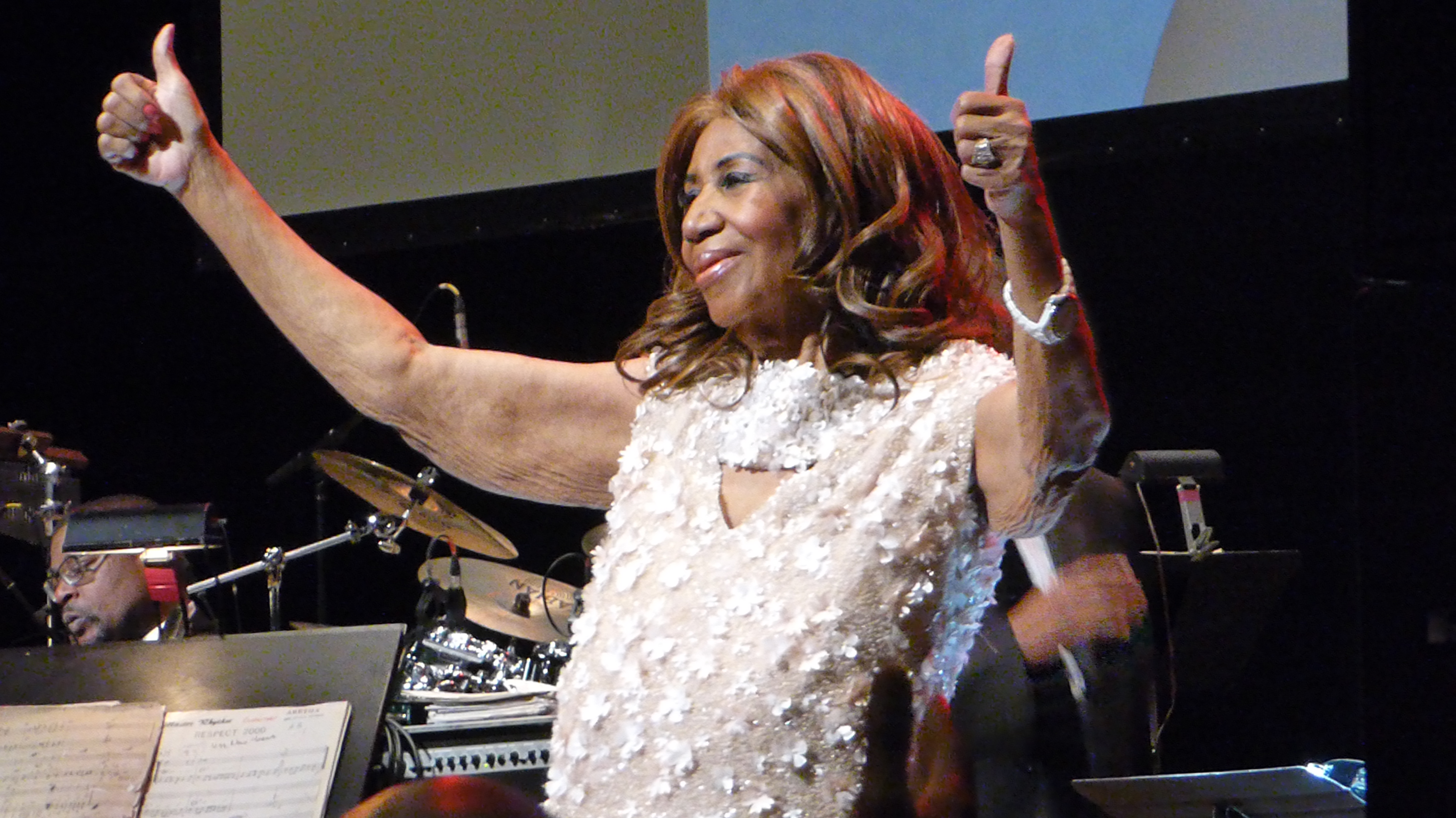
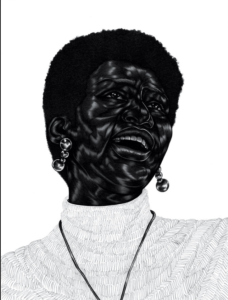
 The New York Times Magazine did my friend, Aretha Franklin, quite a disservice in their latest issue about famous people who passed this year. The woman who was named Best Singer Ever by Rolling Stone, winner of 18 Grammy Awards, the Queen of Soul didn’t even merit a feature story. Instead she got a few words from someone no one’s ever heard of, plus some ghastly art by the same person. The art is so ugly I still can’t get over it. I’ll put the picture inside here, so you can see what the Times thought of Aretha and how they wanted to memorialize it.
A lot’s been written about Aretha in the last few months since she died at age 76 on August 16th. She owed back taxes, her house wasn’t worth that much, she didn’t leave a will. Whatever. None of that matters. You still don’t get it if that stuff bothers you. She was Aretha. She was the Queen. She could do whatever she wanted.
Aretha loved her friends, and loved her family. Her last twenty years was an attempt to take control of her life after kow-towing to everyone for decades. It wasn’t until Clive Davis scooped her up at the end of her Atlantic Records contract, in 1979, that Aretha came in to her own. Before that she’d been her father’s daughter, and Jerry Wexler’s muse. Remember, Ahmet Ertegun and Jerry let her go from Atlantic, service over, thanks a lot.
At Arista, Aretha was finally treated like a Queen, and she roared back onto the charts with a Chapter Two that eclipsed “Respect” and all those 60s and 70s hits. Not only did she have her own landmark number 1 hits like “Freeway of Love” and “Who’s Zoomin Who?” she had hits with the then-young stars of the day like Annie Lennox, George Michael, and Whitney Houston. This was unprecedented.
Since her cancer diagnosis in December 2010, Aretha refused to give in. She literally willed herself into remission. Her friends were scared for her, she wasn’t. She regularly preached on stage about her recovery. She had unyielding faith. Her Renaissance from 2011 to 2017 was remarkable. There were shows I watched where there was so much power in her remarkable voice that it surprised even her. I went to Philadelphia in August 2017 to the Mann Center because I suspected– we never discussed it– this would be her last. (I was right, apart from the Elton John AIDS fundraiser in November.)
We had had dinner and kibbitzed before the show with her deeply devoted tour leader/boyfriend and best friend, Willie Wilkerson. Willie and “the guys”– a close knit group of bodyguards who took care of her like an older sister– had come down to Philly and stood beside her at all times. Often there were no women in Aretha’s traveling posse, just these brilliant men who were in her thrall no matter her whimsy. They were her real family, even if she hired and fired and re-hired them over and over. Everyone always came back because they loved Aretha.
The Philadelphia show was a masterpiece. I filmed a little of it. Probably others did, too. The Mann Center was packed, and they went wild. Aretha didn’t look ill, yet, in fact she looked good. She wasn’t feeling well, but she rose to the occasion. She told the crowd, “This might be my last show, but I would always come back to Philly.” Every song was delivered at the top. She wasn’t strong enough for her punishing 9 minute version of “Bridge Over Troubled Water,” but she sat at the piano and played her heart out on “My Cup Runneth Over.” She gave me a little gift, and my heart skipped a beat– Stevie Wonder’s “Until You Come Back to Me,” which I often asked for and rarely got. (In Los Angeles the summer before, she asked me. What do you want to hear? — We were on the phone– And I said, Until You Come Back to Me. Which she promptly forgot to do.)
When Aretha came off stage, all the air came out of her. I could see it. On stage she’d been puffed up, dressed in white, a diaphanous cloud that hovered above, other-wordly, a goddess. But when Willie threw her fur coat over her shoulders, we could see it– that was it. She was done. She’d released Aretha with a capital A into the night, and she was human again. “Aretha, do you want go out?” I asked. Mmm,nnt. She said, “I’m going to be horizontal for a very long time.”
photo cShowbiz411 Roger Friedman

