
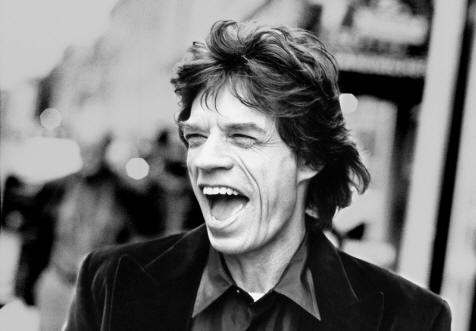
I can’t wait to see Bret Morgen’s “Crossfire Hurricane” on a big screen next week. But watching at home on a TV is what most people will do when it airs on HBO on November 15th. And that’s where it probably works best, because “Crossfire Hurricane” is an intimate look at the Rolling Stones on the occasion of their 50th anniversary. Alas, it’s only two hours long, so the film– which seamlessly reviews a lot of archival film, unseen clips and long forgotten home movies with voice overs from the Stones now–stops short in the 1980s.
That’s right, there needs to be a part 2. Much of “Crossfire Hurricane” concentrates on the Stones early days through around 1980, with much emphasis on the band’s rise from R&B roots to rock superstardom to the death of Brian Jones, the tragedy at Altamont and the second burst of success from “Brown Sugar” through “Exile on Main Street.” Morgen barely gets through the exit of Mick Taylor and arrival of Ronnie Wood, and never gets to much about Bill Wyman, his departure, or what came next as the Stones determined to make the twenty year marathon from “Steel Wheels” to today. Whew! “Crossfire” really could be volume 1 of a trilogy.
http://www.youtube.com/watch?v=iecBKNWn6hc
What do we learn? A lot. For one thing, Mick Jagger, who’s always said he remembers nothing, has a very good memory. Because Keith’s book proved him an excellent chronicler, we’re not surprised about his recollections. Jagger, who produced the film with his partner Victoria Pearman, comes off as quite lucid, cogent, and spot on. In early clip an interviewer observes that all of the Stones were well educated but pretend not to be interviews. But Jagger, who famously went to the London School of Economics, found himself at a young age on a chat show discussing the rage and desires of the Stones rabid fans. And to say he “got” it is an understatement. The whipping of crowds into a frenzy was not an accident.
“Crossfire” is full of rarities, forgotten bits, and discoveries. It’s completely absorbing. Particularly interesting, at least to me, was the decline of Brian Jones, his firing and death, how it was handled. Also Mick Taylor admitting he left the band, the biggest rock and roll band in the world, to protect himself and his family from Keith Richards’ drug problems.
And there are also great ‘home movies’ of Jagger and Richards writing their first songs together. Unlike John Lennon, Paul McCartney and George Harrison, they were not composing as teenagers. They were already past their first album of covering blues songs when manager Andrew Loog Oldham told them they had to come up with material. It starts pouring out of the pair organically. While Richards is always thought to be the genius song builder, you see Jagger’s brilliance in the collaboration.
Believe it or not, there’s no gossip in “Crossfire”– drugs, yes, but no kiss and tell, no wives or kids, girlfriends, hookups, etc. Anita Pallenberg and Marianne Faithfull are footnotes. There’s no time for it because “Crossfire” sticks close to performance, composition and how they’re shaped. It makes you think that after all this time, the difference between the Beatles and the Stones is like film vs. theater. The Stones were and are made for the stage–a theater, stadium or the world. While George Martin directed the Fab Four in little masterpiece recordings, the Stones were more concerned with their live interaction. It’s the reason why 50 years later fans are spending thousands of dollars to see them one more time this winter.

