
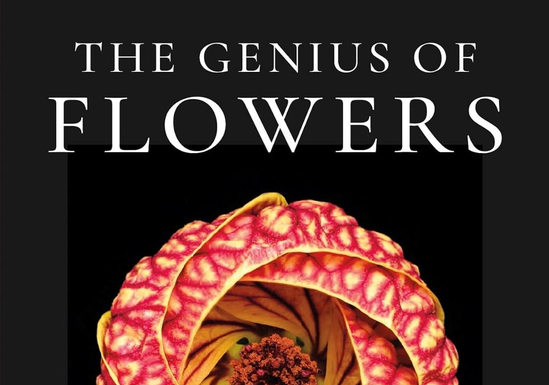
Jill Brooke’s eye popping “Genius of Flowers” has just hit bookstores and amazon. It’s already getting raves, and is the perfect holiday gift. How do I know? Someone told me they just bought five copies for friends!
The gorgeous book — art directed by Patty Fabricant — is a knockout both picturewise and in the savvy essays about how flowers affect our lives.
Even though Ed Sheeran is in the news for other things lately, he leads the Music section of the book.
Brooke — former CNN correspondent and NY Post TV columnist — writes: “Ed Sheeran’s “Supermarket Flowers” began as a private goodbye to his grandmother. In it, grief is measured not in grand gestures but in the poetry of the ordinary—fluffed pillows, half-drunk cups of tea, supermarket flowers left behind. He never meant to release it, but at her funeral, his grandfather urged him to share the song. “That’s the most special song on the record for me,” Sheeran admitted, and clearly for millions of others, too.”
Ed’s pal Taylor Swift figures in the connection between music and the floral. Brooke writes: “Few artists have turned petals into poetry for every shade of emotion—joy, longing, danger, and renewal. Her lyrics are like a treasure hunt where each flower is a clue, each bloom carrying a distinct emotional hue. Daisies soften what once was toxic—“I once was poison ivy, but now I’m your daisy.” In “Clean,” wilted blooms capture fading love: “The flowers that we’d
grown together died of thirst.” Roses appear not just as emblems of beauty but also of potential danger: “A rose garden filled with thorns.” Lavender drifts in as intoxication and doesn’t want to leave, while wisteria offers barefoot simplicity and grounding—“I want to watch wisteria grow right over my bare feet.”
And I did not know that Lynn Anderson’s all time country hit, “I Never Promised You a Rose Garden,” inspired a very expensive rose you can buy named for the singer. The late Clive Davis had them in his garden, and he wasn’t promised anything but a hit!
Brooke writes: When the ‘Lynn Anderson’ rose debuted in 1995, it was created by the floral industry’s biggest hitmakers. The architects were California’s Weeks Roses (rose growers), and hybridizer Joseph Winchel, who are to the rose business what Blake Shelton and John Legend are to show business.”
She adds: “Breeders are no fools and often honor musicians with special flowers. There’s the ‘Barbra Streisand’ rose blooming in dramatic lavender; the ‘Dolly Parton’ rose blazing a coppery red; and the tricolor ‘Judy Garland’ rose unfurling blended yellow, orange, and scarlet blooms. A golden-yellow ‘Freddie Mercury’ rose was created to raise funds for AIDS research. There are even two rose varieties named aft er popular ABBA songs—‘Winner Takes It All’ and ‘Super Trouper’—as well as a white-and-orange ‘ABBA’ daffodil.”
Even the Beatles show up in this tome. Brooke writes: “After George Harrison died, his widow, Olivia, organized “From Life to Life: A Garden for George” at the famous Chelsea Flower Show (2008). It featured 76 plant species celebrating the “quiet Beatle’s’”
creative and contemplative world. “Each year we used to go to Chelsea, and George would take copious notes and come home with a list of plants he wanted to buy,” said his wife. “We started calling him Capability George,” after he eighteenth-century landscape designer, Lancelot “Capability” Brown.

